Inside a Bodywork Session at Power of Touch Wellness
I've been doing this work for a long time, and the question I get most isn't about techniques or pricing or whether my schedule is open. It's some version of: "But what do you actually do?"
Usually asked by someone who's been referred by their doctor or yoga teacher and isn't quite sure what they're walking into. Even my most enthusiastic clients tend to trail off when they try to explain it to a friend. "I don't know," they'll say. "You just have to try it for yourself."
That's a lovely thing to say. It's also not very useful if you're standing on the outside, wondering whether to make an appointment with someone whose work you can't quite picture.
So this is my attempt to fix that. Here's what actually happens during a session at Power of Touch Wellness, from the moment you walk in to the moment you look at your before-and-after photos and say, "wait, is that really me?"
You Keep Your Clothes On
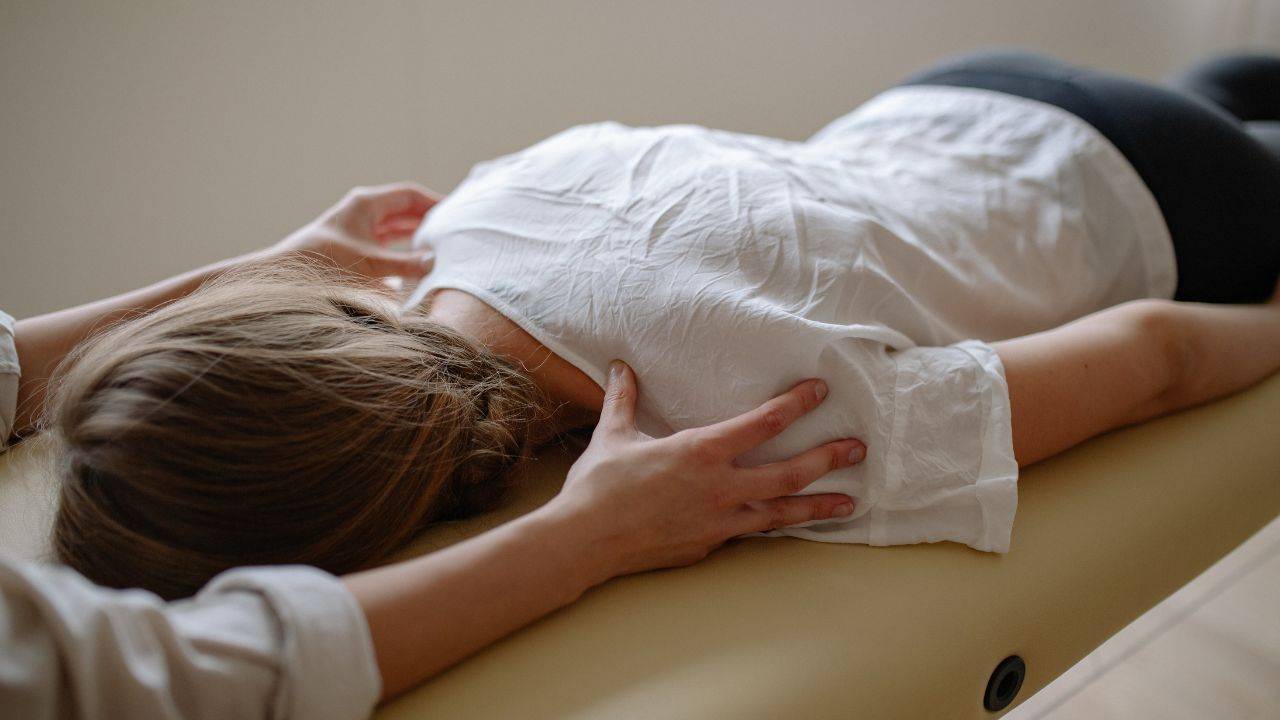
The first thing many new clients notice, and something that makes a lot of them feel more at ease, is that they don't have to undress. For most sessions, you wear your regular clothes. Light, comfortable layers work best. Sometimes I'll ask you to bring or wear shorts or a cami if we might be using techniques that need direct skin contact, like cupping or lymphatic drainage massage. But that's the exception, not the rule.
I work over, under, and around your clothing intentionally. You don't have to feel exposed or vulnerable before we've even started. You can just... arrive.
The Table Does Some of the Work Before I Even Begin
Every table in my practice has an infrared heat mat on it. By the time you lie down, warmth is already moving into your tissues. Not surface heat, but the kind that reaches deeper layers and begins telling your nervous system that it's safe to let go.
A lot of people don't even consciously register this until afterward, when they realize they've been in a low-grade state of ease the whole time. That's the point. The environment itself is part of the therapy.
The Touch Is Lighter Than You Expect
This is where most people's assumptions get challenged, and where some of the most interesting conversations happen. We've been conditioned to believe that massage and bodywork have to hurt to work. My approach to trigger point therapy and fascia work is often much lighter than that. And I hear it regularly: "I can't believe how much has changed from such a gentle touch."
Here's what I know from both science and years of practice: the nervous system responds to input, not force. Fascia, the connective tissue web that runs through your entire body, can shift with sustained, attentive pressure rather than aggressive manipulation. Sometimes the gentlest approach opens what force never could, because force triggers the body's protective instincts rather than releasing them.
I'm not opposed to deeper work when the body calls for it. But I follow what I'm finding, not a protocol.
We Talk, But Only as Much as You Need
Some people want quiet. Some people need to process out loud. What's consistent is that I check in throughout the session: your comfort level, what you're noticing, how your body is responding. You're not just a body on a table. You're a person who has lived in this body for decades, and that history is important.
We Document What Changes
This is the part that often surprises people most. Before we begin, I often take a few photos: your posture, your head position, how your shoulders sit, whether your hips are level.
After the session, we take a look together. And what people see in those photos is frequently the most convincing thing I could ever say. A head that was jutting forward, now sitting back over the shoulders. Shoulders that were hiked up toward the ears, now dropped and easy. Hips and legs that measured uneven, now more balanced. Changes that, in the moment, you might have felt but couldn't quite believe, now visible, right there, in front of you.
Your body was never the problem. It was compensating, protecting, bracing. When given the right input and the right environment, it remembers something closer to ease.
So Who Is This For?
It's for people who have run out of easy answers, whether or not they have a diagnosis. Some of my clients have been through the full medical workup and have a name for what they're dealing with: fibromyalgia, EDS, hypermobility, chronic pain conditions where conventional care has little to offer the soft tissue pain itself. Others have pain or stiffness that conventional care has simply failed to resolve. Either way, they've been thorough. They've been patient. And somewhere along the way, they started wondering if this is just how it's going to be now.
It doesn't have to be.
The work I do doesn't fit neatly into a category. It draws from myofascial trigger point therapy, fascia work, cupping, gua sha, and other approaches, guided by what your body is telling me in the moment, not a predetermined menu of techniques. I lean into what science supports, and I stay open to what works even when we don't yet fully understand why.
If you've been told to just live with it, I'd gently suggest getting a second opinion. From your own body.
I see clients at both of my Pittsburgh-area locations, in Wilkinsburg and Monroeville. If you're dealing with chronic pain, tight fascia, or stubborn trigger points and you're curious whether this kind of work is right for you, I'd love to talk it through with you.
Ready to feel the difference for yourself? Book a session at our Wilkinsburg or Monroeville location, or reach out with a question first.